
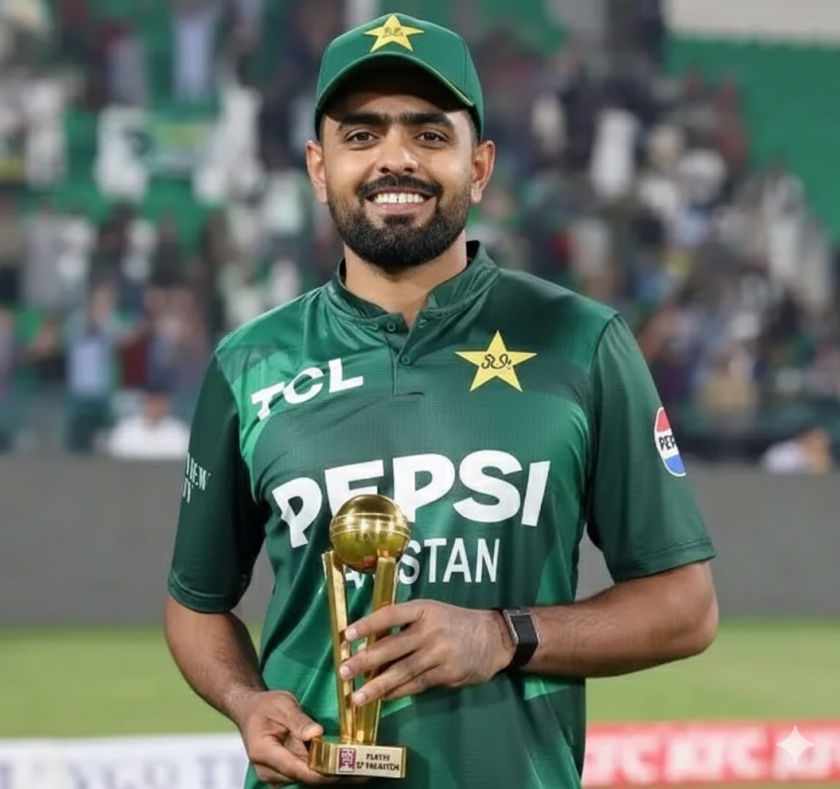
What should be a unifying national passion is increasingly splitting into digital tribes. Pakistan cricket, long powered by emotion, loyalty, and fierce pride, is now witnessing a new and troubling trend: the rise of player‑based fandom wars, where supporters of Babar Azam and his critics — often rallying behind whoever replaces him in the batting order — treat every match as a referendum on their preferred player rather than a contest Pakistan must win.
This divide has been simmering for years, but in recent months it has hardened into something more toxic. The latest flashpoint is the emergence of Agha Salman, whose recent performances in the middle order have been met with applause from many neutrals — but also weaponized by a vocal segment of anti‑Babar voices. The moment Salman plays well, timelines flood with posts mocking Babar’s strike rate, leadership, or “privilege.” And when Salman fails, the pendulum swings back, with Babar loyalists celebrating his dismissal as if it were a wicket for Pakistan. It’s not just fans; the Pakistani ex-cricketers are also jumping into this social media war to win traffic to their Facebook pages and YouTube videos.
The sport becomes secondary. The scoreboard becomes irrelevant. The team’s success becomes collateral damage in a battle of egos fought behind profile pictures and hashtags.
A Rivalry Manufactured Online
Unlike traditional cricketing rivalries — Miandad vs. Imran, Younis vs. Inzamam — this one isn’t rooted in dressing‑room politics or selection debates. It is algorithm-driven, fueled by social media platforms that reward outrage, polarization, and tribal identity.
A single innings from Salman or Babar can trigger thousands of posts, memes, and reaction videos, each designed to provoke the other camp.
The irony is that both players occupy completely different roles. Salman is a middle‑order stabilizer and spin hitter; Babar is a top‑order anchor with a decade of elite consistency. Their performances are not mutually exclusive. Yet online, they are framed as rivals in a zero‑sum game.
Fans No Longer Celebrate Pakistan — They Celebrate Their Player
This shift is visible during matches. When Salman hits a six, some fans cheer not for Pakistan’s rising total but for the “victory” over Babar’s supporters. When Babar plays a steadying knock, his fans respond with “silence the haters” posts rather than celebrating the partnership or the match situation.
The emotional investment has moved from the team to the individual.
And that is where the danger lies.
Players Become Pawns in a Digital Tug-of-War
The players themselves have never publicly expressed animosity. In fact, Babar has repeatedly praised Salman’s temperament, and Salman has spoken respectfully about Babar’s influence. But online, their names are used as ammunition.
This environment creates pressure that goes beyond performance. Every failure becomes a meme. Every success becomes a weapon. Young players entering the team now face not only cricketing expectations but also the fear of being dragged into the Babar‑versus‑anti‑Babar vortex.
A Fan Culture at a Crossroads
Pakistan cricket has always thrived on passion, but passion without perspective becomes poison. The team is entering a generational transition, with new talent emerging and senior players redefining their roles. This
 American Muslims