
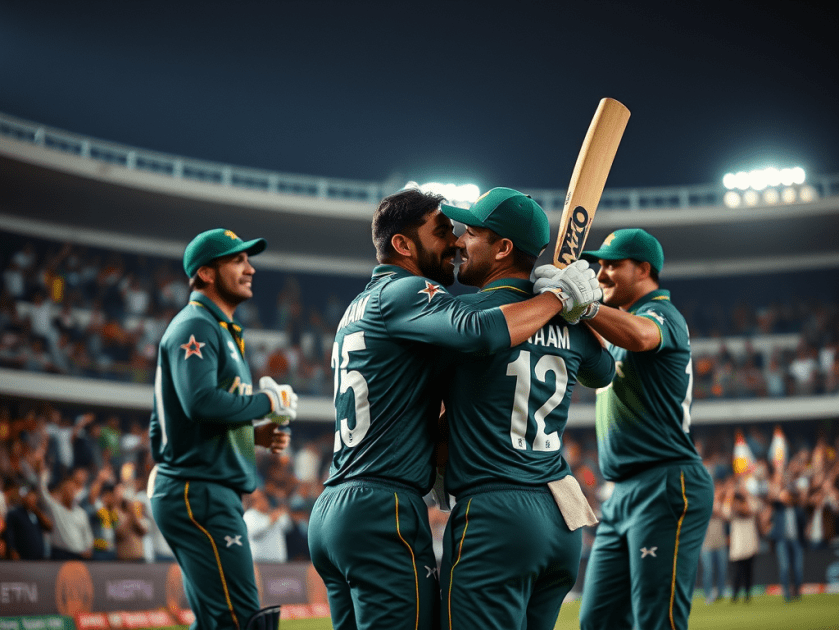
Pakistan’s brief boycott threat wasn’t a misstep — it functioned as a calculated pressure tactic that forced the ICC and global stakeholders to acknowledge realities they had been ignoring. The outcome shows that PCB walked away with more leverage than it had going in.
1) ICC’s tone shifted from dismissive to conciliatory
The ICC’s initial stance — essentially “fixtures are final, take it or leave it” — mirrored Bangladesh’s earlier hardline position.
After Pakistan’s escalation, the ICC issued a measured, reconciliatory statement, acknowledging Pakistan’s concerns and emphasizing dialogue.
This shift matters:
- It publicly validated Pakistan’s position.
- It signaled that unilateral decisions affecting Pakistan will no longer be rubber‑stamped.
In diplomacy, tone is leverage — and PCB forced that change.
2) PCB successfully highlighted its financial weight in world cricket
For years, the narrative has been that only the BCCI, ECB, and CA are the “big three.”
This episode forced global media and ICC stakeholders to confront a different reality:
- Pakistan contributes far more than 5% of ICC revenue.
- India–Pakistan matches are the single biggest commercial product in world cricket.
- Pakistan’s participation is essential to ICC’s broadcast value.
By pushing the issue into the open, PCB strengthened its case for a larger revenue share in upcoming cycles.
This is long‑term leverage, not a short‑term loss.
3) PCB established a de facto precedent: Pakistan will not play in India
Without shouting it from the rooftops, PCB achieved clarity:
- Pakistan will not tour India under current political conditions.
- Any future India–Pakistan match will require a neutral venue or hybrid model.
This is now an accepted operational reality, not a point of debate.
India’s stance created the precedent — Pakistan has now formalized it.
4) Political interference by BCCI now carries a financial cost
The boycott threat demonstrated something broadcasters already know but rarely say aloud:
- If BCCI uses politics to block Pakistan, the entire ICC commercial model collapses.
- Broadcasters lose tens of millions per missed India–Pakistan match.
- That financial pressure now acts as a natural check on political maneuvering.
PCB didn’t need to “win” a public fight — it needed to signal the cost of future interference.
That signal has been delivered.
Bottom Line
PCB didn’t cave.
It used a boycott threat as a strategic instrument, extracted concessions in tone, recognition, and future leverage, and walked back only after achieving its objectives.
This was not a retreat — it was a recalibration that strengthened Pakistan’s position in ICC politics going forward.
 American Muslims